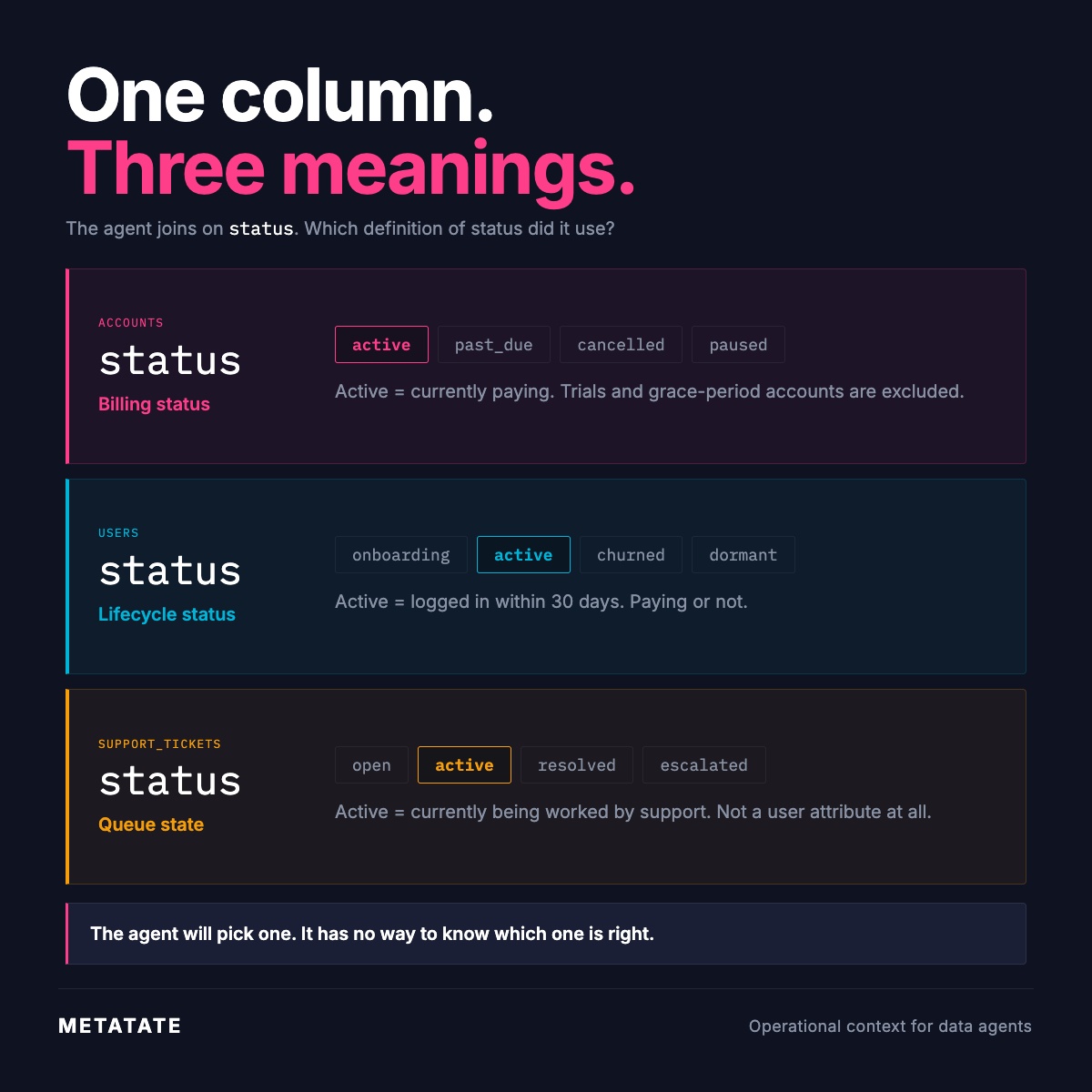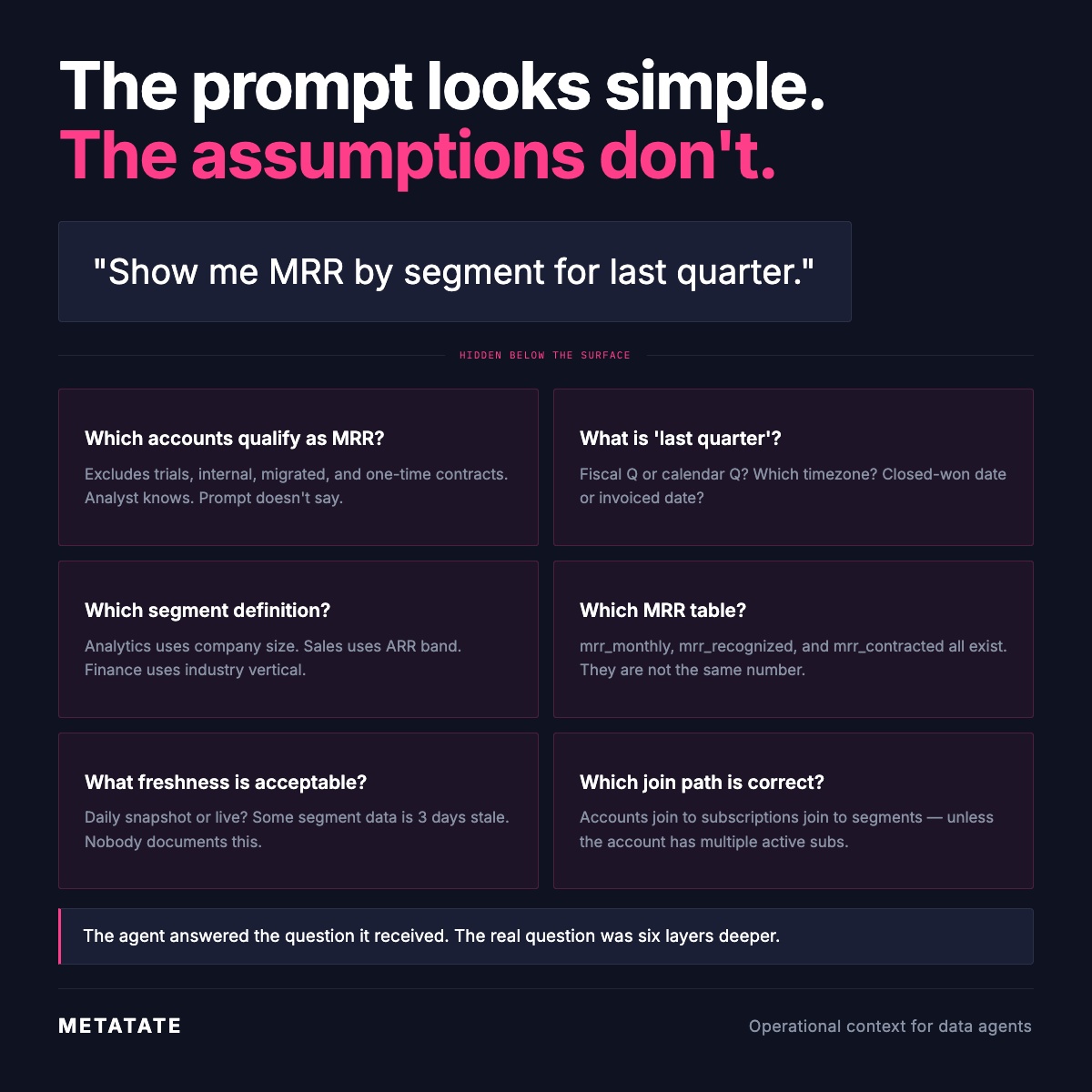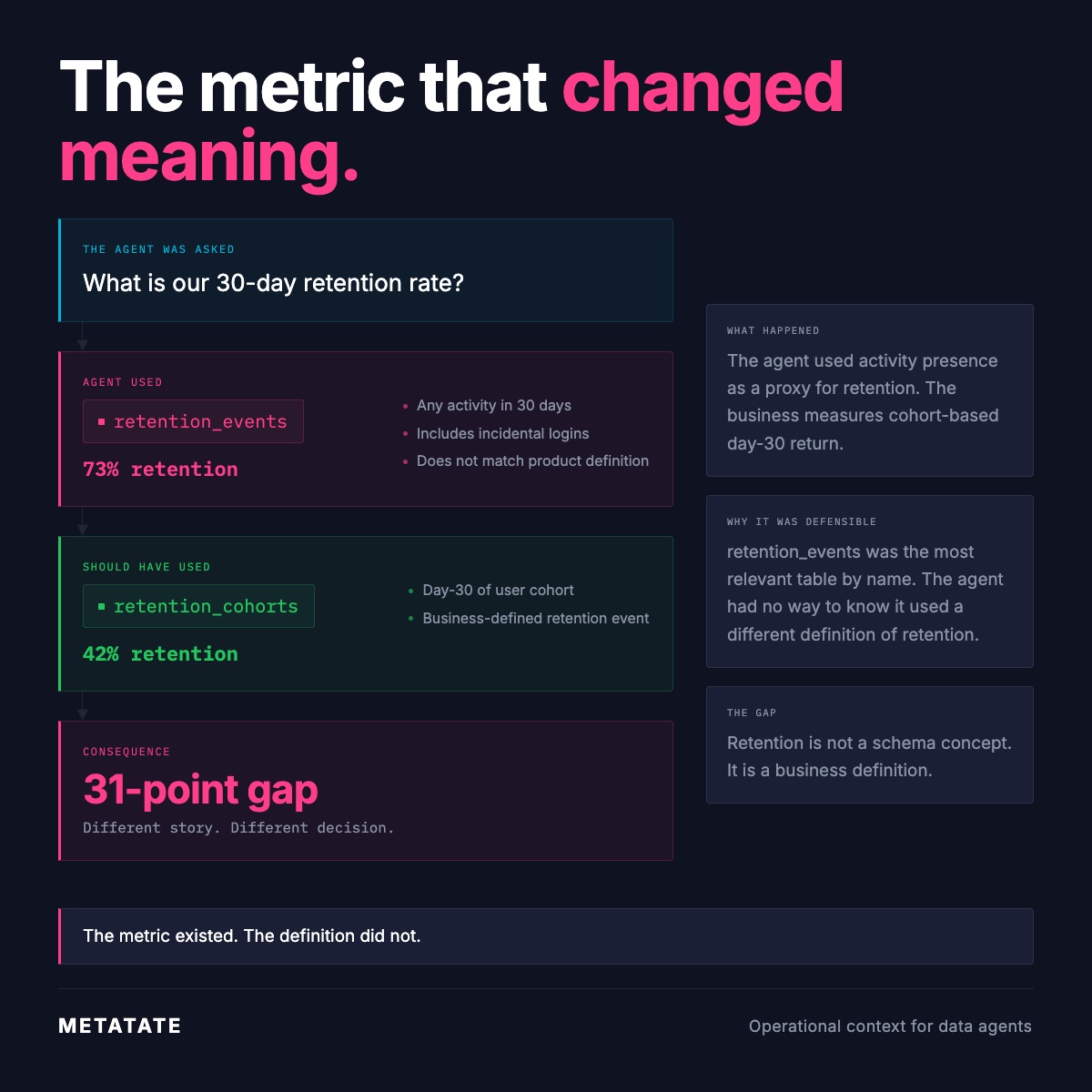
The question was simple: what is our 30-day retention rate? The AI used retention_events. The business uses retention_cohorts. The result was a 31-point gap: 73% versus 42%. Different story. Different decision.
Retention is a business definition, and the schema has no field for it. The table name retention_events describes what the table contains: activity presence over time. It says nothing about whether that operationalization of retention is the one the business actually uses.
The business uses cohort-based measurement: Day-30 of a user cohort, with a specific definition of a retention event, excluding incidental logins. That definition lives in a wiki page, a Slack thread, and the heads of three people on the product team. The warehouse doesn't have it.
When the agent selected retention_events, it produced a confident, plausible, incorrect number. The query compiled. It ran. It returned data. The data meant something different than what was asked.
Schema describes shape. Intent is a different layer entirely. Until that layer is accessible to automated systems, every query against a business metric is a guess at what the metric actually means.