The filter looked right.
The agent was asked how many active accounts existed. status = 'active' was the obvious filter. But 'active' in the schema doesn't mean 'active' in the business sense.
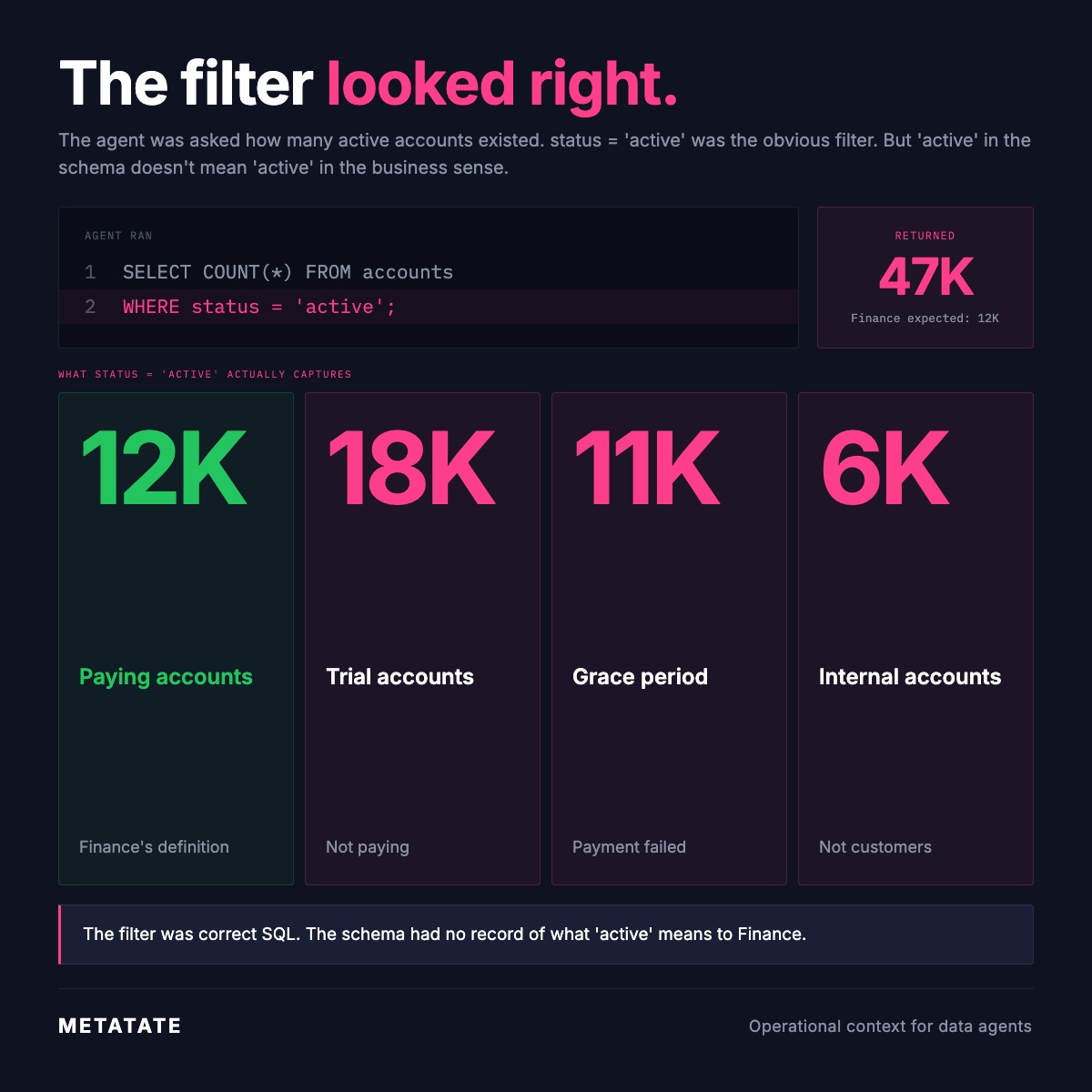
The agent ran SELECT COUNT(*) FROM accounts WHERE status = 'active'. It returned 47K. Finance expected 12K. The filter was correct SQL. The schema had no record of what 'active' means to Finance.
Status = 'active' captures four different populations. Paying accounts: 12K. These are what Finance means by active: currently paying, past the trial period, with no failed payments. Trial accounts: 18K. In free trial. The filter captures them; the business definition excludes them.
Grace period accounts: 11K. Payment failed. Status was never updated. The account shows as active because nobody wrote the rule that says it shouldn't. Internal accounts: 6K. Test and employee accounts seeded during development. The is_internal flag exists. The filter has no way to know it matters.
The query returned 47K because the schema's definition of active and Finance's definition of active are different things. The schema stores a value. Finance applies a judgment about which values count. That judgment lives outside the schema.
The filter was correct SQL. The schema had no record of what 'active' means to Finance.